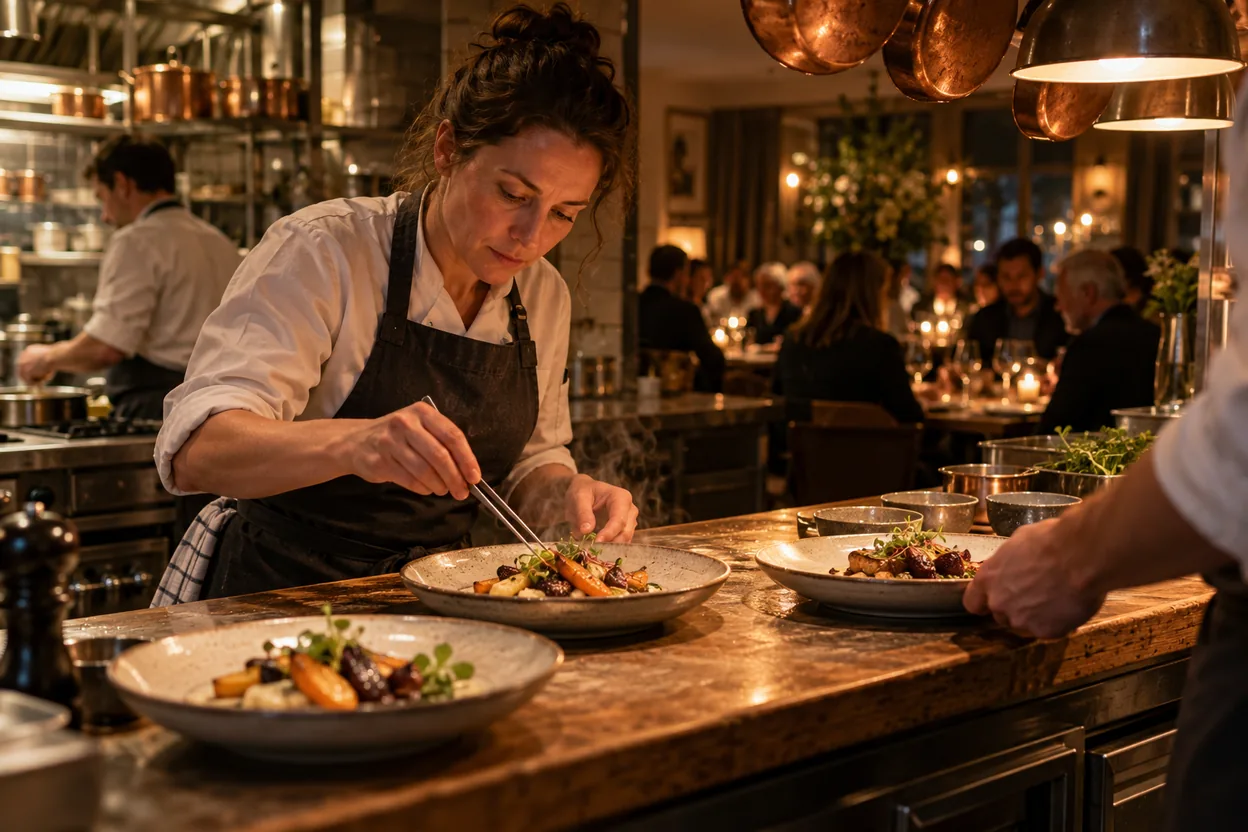
The restaurant industry in Sweden is extremely competitive. In major cities there are often 20-50 restaurants within a one-kilometre radius. Being well visible isn’t optional, it’s survival.
But it also means the restaurant that does the visibility work right has a tremendous advantage. Few competitors do it well. Customers are active (searching every day for “lunch near me”, “Italian restaurant [neighbourhood]”). And with the right visibility, table bookings follow.
In the Swedish restaurant context two platforms are specifically important beyond Google: The Fork (for booking + reviews, owns Bookatable and dominates in major cities) and Tripadvisor (in tourist cities). For neighbourhood restaurants, booking-system integration via Caspeco, Mr Yum, or Heynow is common and directly affects conversion.
Here’s what specifically works for Swedish restaurants.
Google Business Profile, the single biggest visibility source
For restaurants, Google Maps is the single biggest visibility source. More than for any other industry.
When someone searches:
- “Lunch near me”
- “Italian restaurant Vasastan”
- “Best pizza Gothenburg”
- “Restaurant open late Malmö”
…it’s the Local Pack (the three profiles under the map) that draws the majority of clicks.
Specifically for restaurants:
- Primary category: Be specific. “Italian restaurant” not just “Restaurant”. “Pizzeria” if primarily pizza. “Café” if primarily a café. “Vegetarian restaurant” if relevant.
- Subcategories: “Take-away restaurant” if relevant. “Bar” if alcohol service is central.
- Photos: Many and varied. The premises at different times of day. The food you serve (not stock photos). Staff in kitchen/service. Table setting.
- Menu: Add the menu directly in GBP. Many people read it there first.
- Posts: Weekly. Seasonal menus, today’s specials, events.
- Services: Add what’s relevant, take-away, lunch, à la carte, catering, etc.
Reviews, Google primarily, Tripadvisor where needed
For restaurants, reviews are one of the strongest local SEO signals and the biggest single trust factor.
Two platforms to focus on:
Google: absolute priority. This is where new customers find restaurants.
Tripadvisor: especially if you’re in tourist cities or have international visitors. Less important for restaurants in smaller cities or non-tourist destinations.
Not a priority:
- Yelp: low traffic in Sweden
- Eniro/Hitta.se: less relevant for restaurants
Active strategy:
- Ask after the visit via SMS the next day (if you have a phone number)
- On the table/menu: “If you’d like to write a review, here’s the link” (with QR code)
- On the bill: small note with the review link
- Respond to all reviews, especially important for restaurants where tone and hospitality are central
Food on Instagram, honest photos beat pretty ones
Instagram for restaurants works as a trust builder and appetite driver.
What works:
- Real food you actually serve. Not stock photos. People are experts at spotting the difference.
- Different times of day. Bright food shot at 12, atmosphere shot at 19.
- Process videos. Pasta from scratch, pizza in the wood-fired oven, plating.
- Staff/kitchen. The chef at work. The smiling waiter.
- Seasonal dishes. “Autumn’s new menu” or “Summer salad”.
Frequency: 2-4 posts per month goes a long way. Stories more often for today’s specials.
For restaurants that want to push further: TikTok can be extremely effective. More in TikTok ideas for restaurants.
Table booking without friction, especially Friday-Saturday
If a customer wants to book a table and it’s complicated, they book somewhere else.
Good practice:
- Booking system integrated with GBP (Bookatable, OpenTable, or equivalent)
- Booking on the website without login
- Phone visible for traditional customers
- Chat or Messenger if staff have time to reply quickly
Friction = lost bookings. Especially on Friday-Saturday evenings when people book at the last minute.
The website’s role, more than just a PDF menu
The restaurant website is often underdeveloped. Common scenario: a homepage with photos + a menu page that’s a PDF.
Better:
- Clear offer (“Italian restaurant in [neighbourhood] since [year]”)
- Menu as a web page, not a PDF (ranks better in Google)
- Photos of the premises, atmosphere, signature dishes
- Reviews embedded from Google
- Booking directly with available times visible
- Address + opening hours visible on every page
- Contact + phone clickable
Seasonal movements in the restaurant year
Restaurants have natural movements through the year:
- Lunch (every week): Build loyalty among lunch customers. They’re the most valuable returning guests.
- Weekends (Friday-Saturday): Where most bookings come from. Make sure the booking system works.
- Seasonal menus (4 times/year): Major PR opportunity. Post on all platforms simultaneously.
- Holidays (Christmas, New Year, Walpurgis, Midsummer): Special menus + early booking openings.
- Summer (outdoor seating): Lifts dramatically if you have a terrace.
What you don’t need
- Own blog platform (hard to maintain, rarely ranks for restaurants)
- LinkedIn presence (rarely relevant)
- Many different ad platforms simultaneously (focus on Google + possibly Meta)
- Viral marketing (local organic visibility is more valuable)
A typical restaurant’s visibility stack
Must-have:
- Verified and optimised GBP (complete, 30+ photos, regular posts)
- 80+ Google reviews (for big-city competition)
- Website with menu as a web page + booking
- Active Instagram (2-4 posts/month + stories)
- Table booking system that works frictionlessly
Nice to have:
- Tripadvisor presence (for tourist cities)
- TikTok presence (for younger audience)
- Seasonal PR through local media
- Email list for regulars
The practical first step
- Audit GBP, right category, 30+ photos, menu visible, regular posts
- Set up review system with QR code on the table or bill
- Review the booking flow, check from mobile. How long does it take to book?
- Put the menu as a web page if it’s only a PDF today
- Decide Instagram rhythm for the coming 3 months
Within 90 days you notice measurable improvement in findability. Within 6 months strong local visibility.
Want to go deeper? Read Visibility for cafés for a complementary perspective, or TikTok ideas for restaurants for video content.