Cafés are at once simple and challenging to market. Simple because customers are easy to find (everyone drinks coffee). Challenging because competition is tough and differentiation is often subtle.
What specifically works for cafés isn’t fundamentally different from restaurants, but the priorities differ. Here’s what matters most.
Atmosphere as a visible signal, cafés’ most important communication
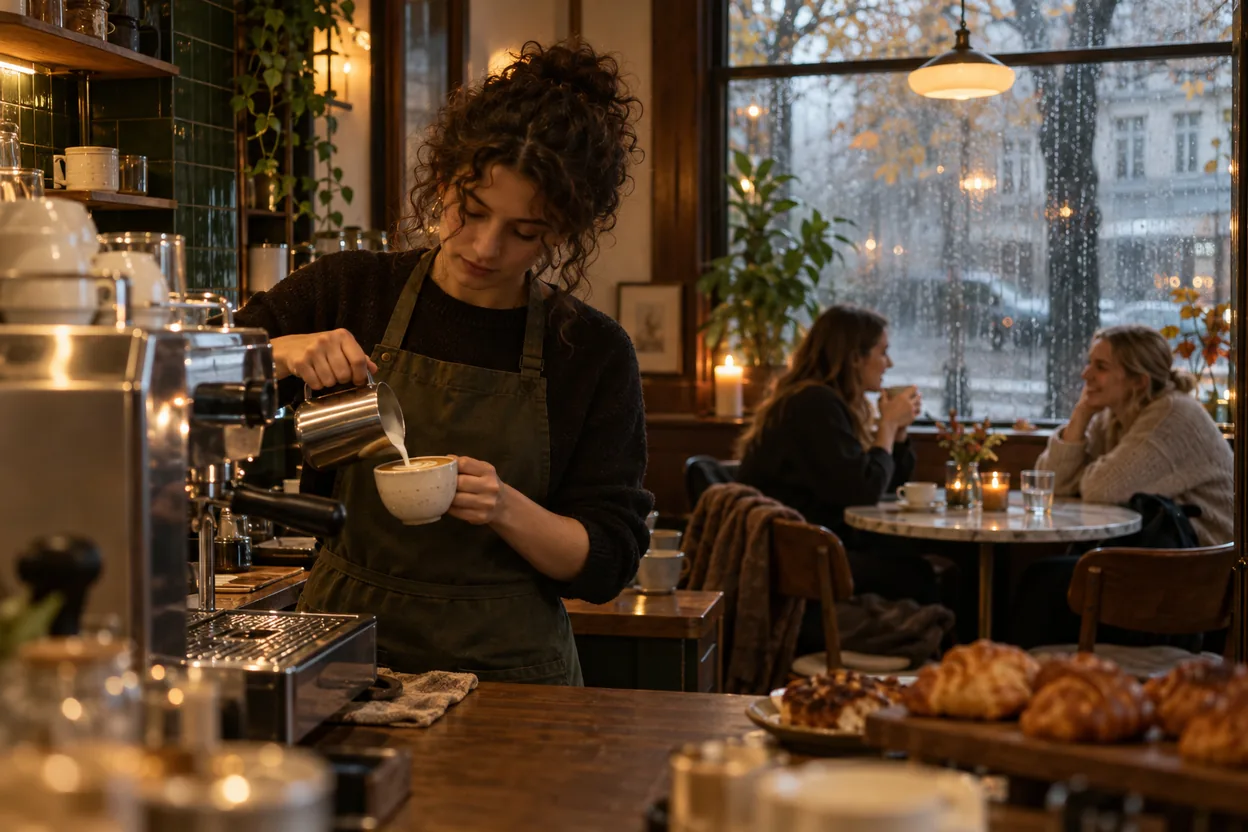
For cafés, the atmosphere is often the most important differentiating factor. And atmosphere sells visually, before the customer comes in.
This means photos are extra important:
On the Google Business Profile:
- The premises at different times of day
- Seating and cosy environment
- Details (a lovely window scene, shelves with products, the coffee machine)
- People actually sitting there (with permission)
- Across the seasons (autumn, winter, summer)
On Instagram:
- Same atmosphere focus
- Consistent visual tone (filter, colour grading)
- Builds recognition of “that place”
Cafés that look like any other café perform worse than cafés with a distinct visual identity.
Specific positioning, break out of the “café” generic
“Café” itself is generic. What makes you specific?
Possible positioning:
- Specialty coffee (for coffee enthusiasts)
- Homemade fika (cinnamon buns, cakes from scratch)
- Dog-friendly café
- Breakfast café (open 7-12)
- Vegan/gluten-free focus
- Study café (Wi-Fi, sockets, calm environment)
- Art café (with exhibitions)
- Family café (with a child-friendly corner)
This shows up on:
- The website (hero headline)
- GBP description
- Instagram bio
- Stories and posts
Specific positioning = better Google rankings for specific searches + stronger recognition among the right audience.
Google Business Profile, where most new customers find you
As with restaurants, this is where a large majority of new customers find cafés.
Specifically:
- Primary category: “Café”
- Subcategories: “Bakery” if you bake, “Breakfast restaurant”, “Lunch restaurant” if relevant
- Services/products: Add specific coffee types, buns, lunch options
- Posts weekly: Today’s fika, seasonal drinks, events
- Photos: As above, atmosphere dominates
- Special hours: Mark holidays in advance
Reviews with text about the experience, not just the product
For cafés, the review text is more often about the experience than about a specific product.
What people write:
- “Cosy environment”
- “Kind staff”
- “Good for working”
- “Dog-friendly”
- “Good outdoor seating”
- “Proper coffee”
These phrases become visible to Google and affect which searches you rank for. If you want to rank for “café for working”, some reviews need to mention it.
Strategy:
- Ask after the visit (if you have customer information)
- QR code at the table or sign at the till (“Write a review”)
- “Thanks for visiting” sign with a Google link
Returning customers, cafés’ economic backbone
Cafés usually live on returning customers. A person who comes 2x/week is far more valuable than 10 one-off visits.
How to strengthen this:
- Regulars offer (10th coffee free concept or equivalent)
- Email list for special services and seasonal offers
- Staff remember customers and their usual choices
- Consistency in quality, same experience every time
Visibility drives the first visit. Returning customers drive the business.
Seasonal actions, clear rhythms in the café year
Cafés have strong seasonal movements:
- Autumn: Pumpkin spice, cosy indoor atmosphere, longer hours
- Winter: Glögg, Christmas theme, warming drinks
- Spring: Easter fika, first outdoor seating
- Summer: Iced coffee, outdoor seating, longer evenings
Mark these in the calendar. Adjust Instagram content, GBP posts, and atmosphere photos per season.
What you don’t need
- Complicated bookings (cafés are fundamentally drop-in)
- Lots of ads (organic visibility goes far)
- TikTok if you don’t have time (Instagram is enough)
- LinkedIn (rarely relevant)
A typical café’s visibility stack
Must-have:
- Verified and optimised GBP with 30+ atmosphere photos
- 30+ Google reviews (for a city location)
- Specific positioning communicated consistently
- Active Instagram with 2-4 posts/month
- Website (even if simple) with what you serve + opening hours
Nice to have:
- Email list for regulars
- Season-based content planning
- Local partnerships (with artists, other cafés, local roasters)
The practical first step
- Define specific positioning, what are you most known for?
- Audit GBP, atmosphere photos, right category, regular posts
- Set up a review system with a QR code
- Establish Instagram rhythm with a consistent visual tone
- Plan seasonal content for the coming 3 months
Within 60 days you notice measurable improvement. Within 6 months strong local visibility.
Want to go deeper? Read Visibility for restaurants for the broader food sector, or Google Business for local businesses for the pillar guide.