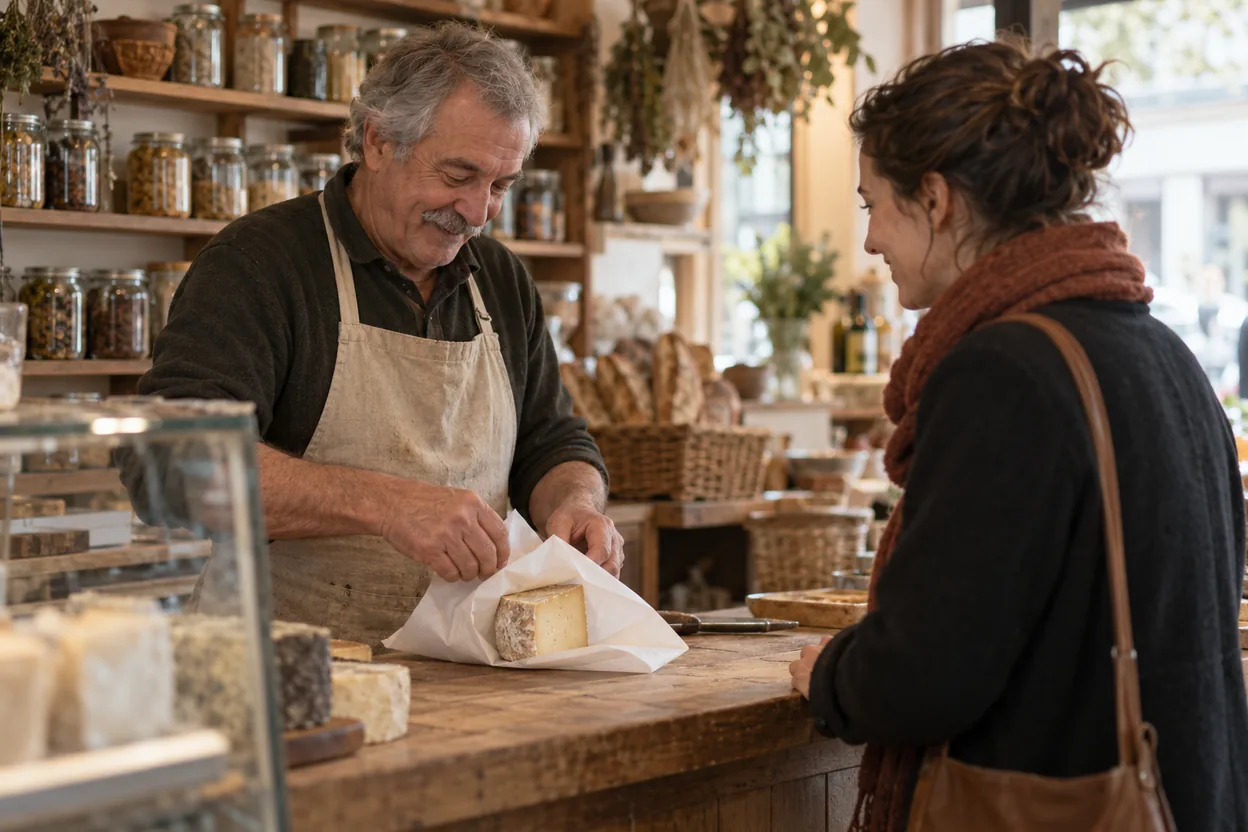
Email isn’t trendy. It’s effective, and one of the most underused channels for Swedish local businesses.
Recurring customers are the most valuable. Email is the direct channel to them.
Statistics Sweden and Internetstiftelsen show that a majority of Swedish internet users use email daily, with substantially higher reach in the 30+ age group than many trendy social platforms have. For local B2C businesses targeting adult customers, email is almost always a stronger reach channel than TikTok or Snapchat. For B2B, it’s more or less standard.
Why email works
1. Direct access to existing customers. Not algorithm-dependent. Emails (mostly) land in the inbox.
2. High conversion. Existing customers convert 5-10x better than cold leads.
3. Cost-effective. Free up to 500 contacts with Mailchimp/Buttondown.
4. Measurable. Open rates, clicks, conversions: direct feedback.
5. Builds relationships over time. Regular contact without being pushy.
When it doesn’t fit
- Cold outreach (unsolicited email is spam)
- Businesses with very few customers
- Industries where people don’t email much
- When you don’t have time to produce regularly
List building, organically
Never buy a list. Build organically:
At the physical location:
- “Sign up for exclusive offers” at the till
- Business cards with a subscription offer
- Receipt with “Get the next offer via email”
Digitally:
- Sign-up box on the website (not intrusive)
- Pop-up with delay (after 30 sec on page)
- Link in email signature
- Offer link on social media
At booking:
- Checkbox “Get our newsletter” at booking
- Default opt-in (where GDPR allows) or a clear question
Important on “default opt-in” in Sweden: GDPR (article 7 + recital 32) requires active consent for marketing emails to private individuals. Pre-ticked boxes are not valid consent according to the EU Court of Justice judgment in Planet49 (C-673/17). In practice: always use unchecked boxes and clear wording about what the person is subscribing to.
Frequency
For local businesses:
- Standard: 1-2 emails/month
- Low: 1 email/quarter (seasonal messages)
- High: 4 emails/month (for active businesses with lots of content)
More = unsubscribes. Less = the list forgets you.
What you email about
Works well:
- Seasonal tips: “Going into autumn? Here’s how to prepare…”
- Exclusive offers (for subscribers, not general)
- News from the business (new services, new locations)
- Personal insights from the owner
- Industry insights for your customers
- Customer stories (with permission)
Works poorly:
- “Buy our services” spam
- Generic content that doesn’t concern the recipient
- Too much text (under 300 words per email is optimal)
- No clear reason for each email
Template for a standard email
Subject: [Specific and relevant, not "Newsletter May"]

Hi [name],

[Personal opening, 1-2 sentences]

[Main content: one specific insight, offer or piece of news]

[Concrete CTA: what should they do next]

Reach out if anything's unclear.

[Sender]
[Company]
[Quick link to book/contact]
Short, personal, concrete.
Tools
Mailchimp: Free up to 500 contacts. The standard.
Buttondown: More minimalist. Free up to 100.
ConvertKit: For advanced needs with automation.
Sendinblue/Brevo: Strong free plan, good for local.
For 90% of local businesses, Mailchimp or Buttondown is enough.
GDPR and Swedish marketing law
Two laws govern email marketing in Sweden:
GDPR (EU 2016/679) regulates how you handle personal data (including email addresses):
- Clear and active opt-in at registration (pre-ticked boxes are invalid)
- Specific information about what the person is subscribing to
- Save the consent with date, source and what was consented to
- Easy to unsubscribe in every email (one-click link)
- Process personal data per GDPR (stored securely, deleted on request)
The Marketing Act (2008:486) + LEK (Electronic Communications Act) regulates marketing:
- Marketing to private individuals via email requires consent (LEK chapter 6, section 18)
- Existing customer relationship exception: you may email existing customers about similar services if they have not actively opted out and if they were informed at the first purchase
- B2B emails are somewhat freer: they may be sent without prior consent if the content is relevant to the business, but must still allow unsubscription
- No bought lists: bought lists never meet consent requirements
If you’re unsure, consult a lawyer once to establish the correct setup. The cost (a few thousand kronor once) is negligible compared to the risk of the Consumer Ombudsman’s enforcement orders, which in recent years have been 100,000-1,000,000 SEK for repeated violations.
For practical guidance: imy.se (Integritetsskyddsmyndigheten, formerly Datainspektionen) has good Swedish-language guidance.
Measurability
What to measure:
- Open rate: Good above 25% for local. Industry average ~22%.
- Click rate: Good above 3%. Industry average ~2%.
- Unsubscribes: Good below 0.5% per email.
- Conversions: Orders/bookings from email traffic.
Changes over time tell you what’s working.
The practical first step
- Set up a free Mailchimp (1 hour)
- Import existing contacts (with consent)
- Create a sign-up flow on the website + in the location
- Send the first email (something concrete + valuable)
- Establish a monthly rhythm
Within 6 months = a list of 100-300 subscribers. Within 12 months = 300-1,000.
This is a valuable asset you own, not rented from Meta or Google.

Industry-specific examples that work
To make it concrete, here’s how a rhythmic email flow can look for different types of local businesses:
Hair salon:
- Month 1: Seasonal tips (autumn colour, hair care in heat, etc.)
- Month 2: Offer to regulars (discount on a treatment they haven’t tried)
- Recurring: Reminder 3-4 months after the last cut (“Time to book in?”)
Restaurant:
- Monthly: New menu / seasonal dishes
- Before holidays: Table booking with seat guarantee
- Special event: Wine evening, guest chef, anniversary
Dentist:
- 6-month reminder for a check-up (automated)
- Information about major changes (new treatments, new equipment)
- Seasonally relevant information (sports mouthguards before the season, etc.)
Craftsperson (housing associations/villas):
- Seasonal tips (winter preventive, spring inspection)
- Offers for package jobs (whole stairwell, whole building)
- Information about regulatory changes affecting property owners
Note that all of these have in common that the emails are relevant to the recipient, not sales-y generic campaigns. That’s the difference between email as a relationship tool and email as spam.
Want to go deeper? Read Loyalty programs that actually work or Building visibility without a marketing budget.